
Emergency Snow Removal & 24/7 Snow Plowing in Grand Rapids, MI – Rely Snow Removal
Request a Free Estimate
We're ready to take on your property!
Rely Snow Removal Grand Rapids provides emergency snow removal for homeowners and businesses in Grand Rapids, MI, backed by 15 years of experience with West Michigan winters. When you are snowed in, blocked out, or watching another round approach, our emergency plowing covers buried driveways and aprons (where driveways meet the street), blocked business entrances, and parking lots. We also provide one-time plow-outs with no contract and cleanup after the storm as part of our wider snow and ice work.
When snow creates a problem at any hour, our phone is answered around the clock for 24/7 storm response. We receive about 3 hours of weather-alert notice before snow starts and monitor lake-effect snow off Lake Michigan. Before a crew is sent, you get a free estimate.
The amount of snow and the available working room determine what equipment your property needs. Our crews use front-end loaders, dump trucks, and skid-steers as needed. The crews are licensed and insured, and each visit is logged.
A buried driveway or blocked business entrance cannot always wait for regular service. Our emergency coverage includes Grand Rapids, Wyoming, Kentwood, and Rockford, along with communities throughout Kent and Ottawa Counties. When you call Rely Snow Removal, the crew evaluates the blockage and brings the equipment needed for the property.
When You Need Emergency Snow Removal in Grand Rapids
Snow or ice becomes an emergency when it blocks access to a place you need to reach now, including your driveway, a business entrance, or a loading area. Overnight lake-effect snowfall can leave you snowed in before the day begins. Emergency snow removal is available as a one-time plow-out, so you can call without having a seasonal contract.
Snowed In at Home
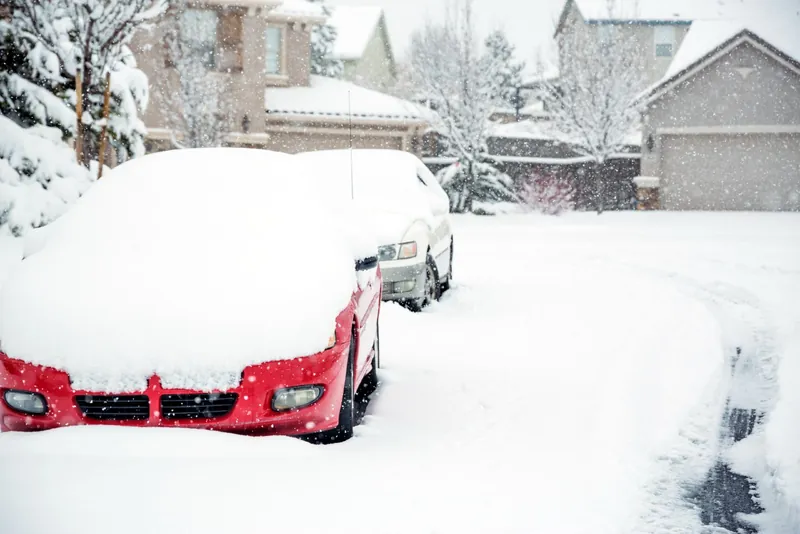
A heavy lake-effect band can leave a foot of snow overnight, making a blocked driveway too much to clear by shoveling. If a municipal blade comes through afterward, it can leave a plow berm across the apron. Also called a windrow, this compacted wall is denser and heavier than the fresh snowfall. We use a snow blower in tight areas while helping dig out your buried driveway so you can get to work, school, an appointment, or a caregiver visit. Elderly homeowners and anyone unable to shovel safely can request a one-time plow-out. For ongoing coverage, our residential service handles different driveway layouts and season-long plans.
A Blocked Business at Opening Time
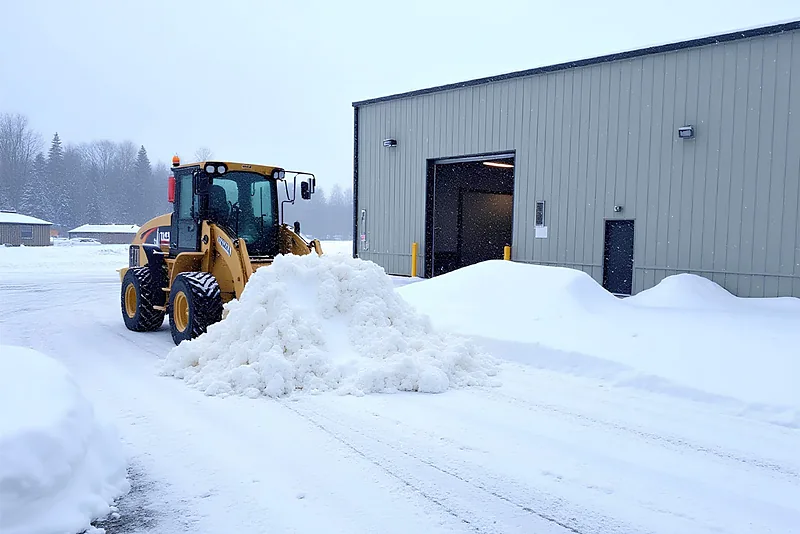
As your posted opening time approaches, a blocked entrance or parking lot can keep staff, customers, and deliveries from reaching the building. We clear the business entrance and drive lanes, along with a safe walking path to the door and access to the loading dock. A skid-steer works in tight corners to help reopen the parking lot before staff and customers arrive. We also clear the walkways and entrance before the doors unlock to reduce the risk of slipping. Crews can apply salt on request before leaving.
After the Storm: Berms, Drifts, and Hardpack
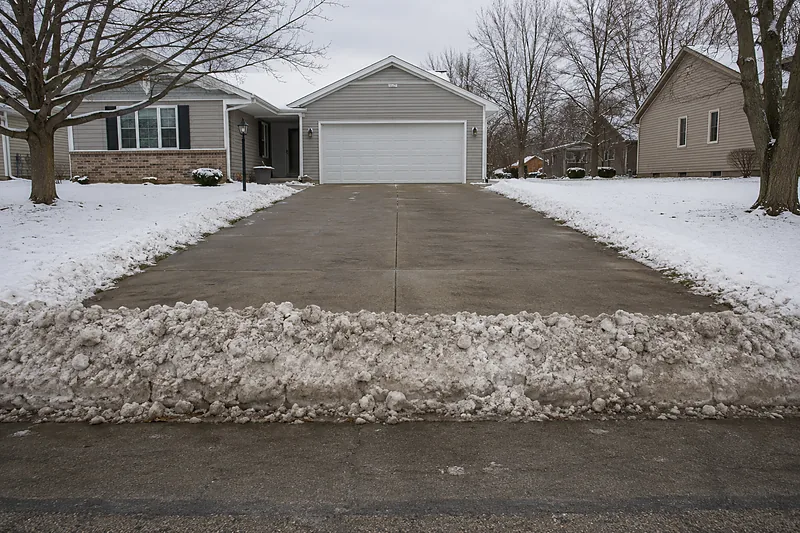
Even after the snowfall ends, your driveway or lot lanes can become blocked again within hours. Wind-driven snow can rebuild into drifts, while another municipal plow pass may put the berm back across the apron. Where vehicles have crossed uncleared snow, traffic compresses it into hardpack, an icy crust that a shovel cannot move. Storm cleanup covers these second-visit calls. Snow that melts during the day can also refreeze overnight. Heavy roof snow and ice dams are different work.
What an Emergency Visit Covers at Your Property
Every emergency visit is scoped by phone as a single job, whether the blockage is at your home or business. Before the crew rolls, we confirm what is included and note the surfaces and access points that need clearing.
The Clearing Itself
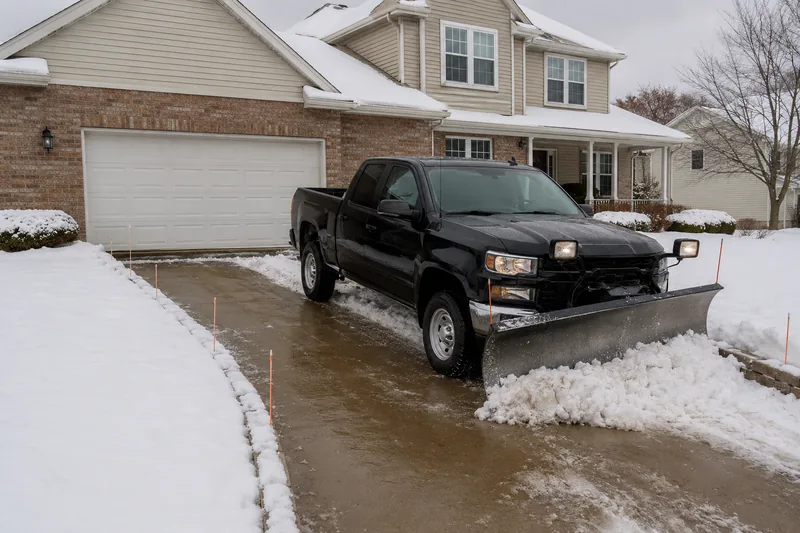
Driveway clearing covers your full driveway pad or business drive lanes, including the apron and the berm. Near a garage door or building face, the crew uses back-dragging, pulling snow away from the structure before pushing it out. The visit also includes a walk path to your main door, entrance steps, and landing, while full sidewalk routes are a separate service.
Where space allows, we place snow piles on-site and keep them clear of sight lines and hydrants. Michigan law prohibits contractors and property owners from depositing snow on or across a roadway under MCL 257.677a, although municipalities are exempt from that rule. During clearing, we keep your snow on your property rather than pushing it into the street. Once there is no room left for another pile, loading and hauling the snow off-site becomes a separate service billed by the hour.
Add-Ons When Ice Is Part of the Problem
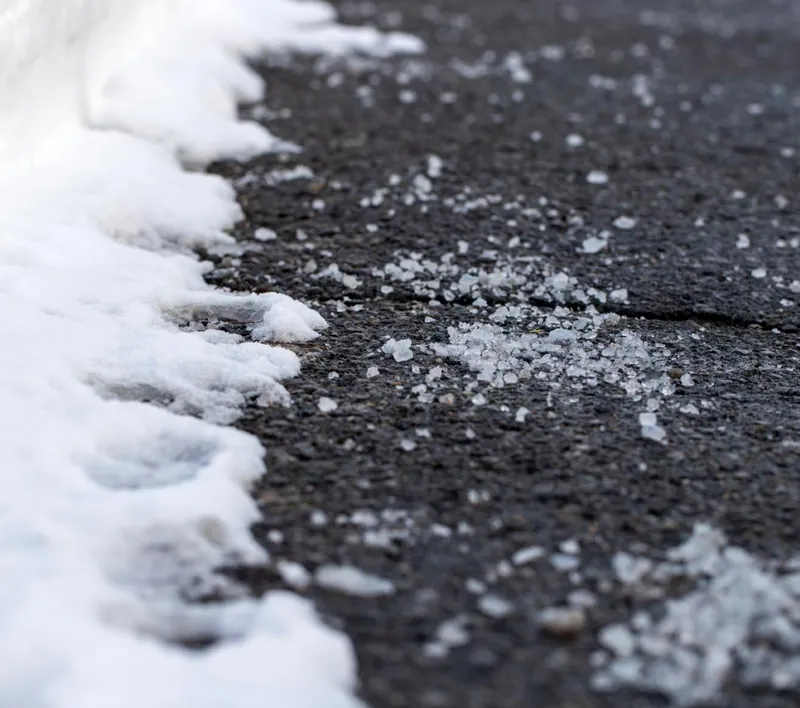
If your cleared walkway, driveway, or lot is glazed with ice, you can request salting before the crew leaves. We spread rock salt or ice melt on the cleared surfaces, with the charge based on how much salt is applied and which product the conditions require. Full de-icing programs are a separate service rather than part of the emergency plow-out.
How Rely Runs 24/7 Emergency Snow Removal Dispatch
When snow blocks access and you need it cleared quickly, you reach a live operation that is already underway. Our 24/7 storm response keeps dispatch, crews, and trucks active while snow is falling, so the process does not have to start from scratch when you call.
Storm Watching and Pre-Staging
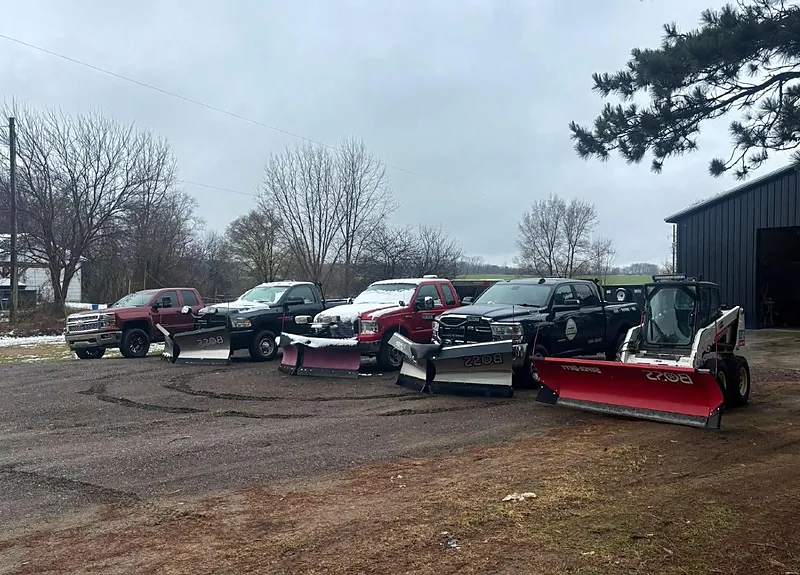
A quick response depends on having crews and equipment ready before the first flakes arrive. Weather alerts give us about three hours of notice to prepare for changing conditions. During that time, we fuel the trucks, mount the blades, assign crews, and load the spreaders. Dispatch also plans the route order before the first inch accumulates. Through the night, we track snow bands on radar, including bands that move between forecasts, so crews can shift toward heavier accumulation. Because the trucks, equipment, crews, and routes are ready in advance, crews roll within hours of a storm without waiting for a separate daytime setup process.
Taking Your Call and Setting the Order
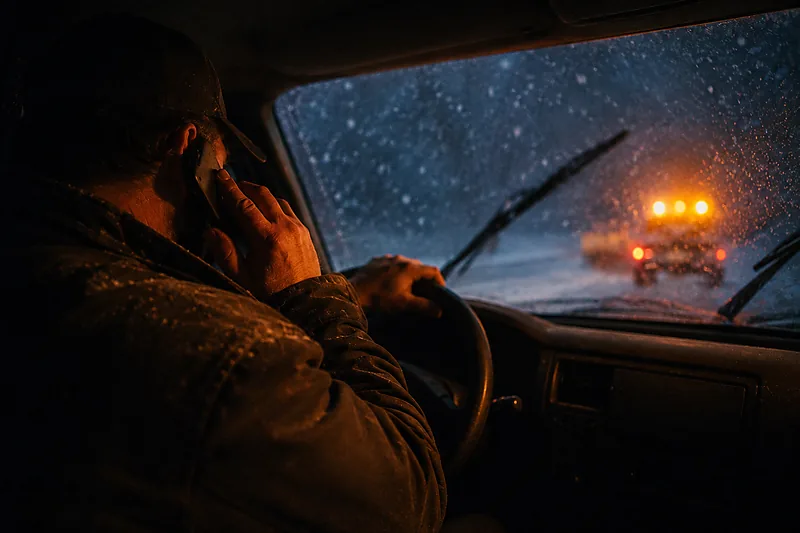
A clear description of the blockage helps dispatch send the right crew and equipment for the conditions at your property. Whatever hour you call, tell us what is blocked, the approximate snow depth, and whether the surface is concrete, asphalt, or gravel. We also ask about anything hidden beneath the snow, including vehicles, hydrants, and curbs.
Before emergency plowing is added to the dispatch order, we confirm the work and price, then provide a free estimate along with a realistic time window. Medical access, businesses nearing opening time, and fully blocked properties receive priority based on the urgency of access. When a county-wide storm buries many properties at once, we explain how the demand affects your window instead of promising a clock time.
Equipment That Handles Storm-Scale Snow
Deep, packed snow can leave your property blocked when a standard plow blade can no longer cut through it. The right snow removal equipment depends on the depth and density of the snow, along with the amount of working space available. We match those conditions to a plow truck, skid-steer, or front-end loader that can clear the property effectively.
Machines Matched to the Depth
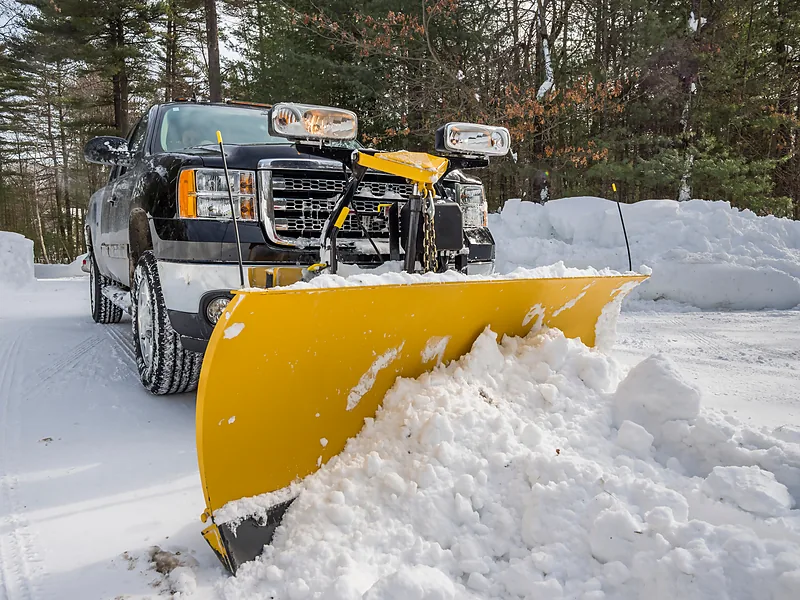
The machine needed to reopen your property changes as the snow becomes deeper, heavier, or more compacted. Plow trucks handle driveways and open travel lanes, while a V-plow folds its blade into a point to break through compacted snow that a straight blade can ride over. An expandable back blade reaches across broad aprons and pulls snow away from doors and loading areas. Where a truck lacks room to turn, a skid-steer can work between parked vehicles or within confined sections of your property.
Once accumulation passes roughly 8 inches, a front-end loader provides the weight and traction that a pickup blade lacks. Its box pusher, commonly 10 to 14 feet wide, contains the load so the loader can move an entire section of a lot in one push. Snow blowers and hand crews finish the areas that machines cannot reach. If the snow must leave the property, dump trucks carry it off-site.
Fast Work That Still Protects Your Pavement
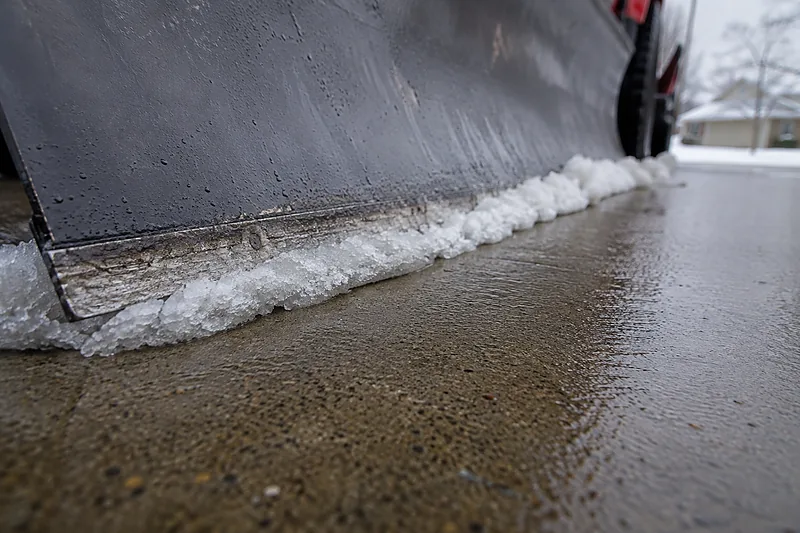
Steel cutting edges are the industry standard and scrape hardpack best. Polyurethane cutting edges do not scrape as thin as steel in freezing conditions, but they flex over surface irregularities and hold up well under down pressure. Polyurethane limits pavement damage by protecting concrete, asphalt, and pavers from gouging and scarring, even on a fast emergency pass. Plow shoes hold the blade above surfaces that need additional clearance. On a gravel driveway, we raise the blade about an inch for the first pass so the stone remains beneath the snow instead of being pushed aside.
An unfamiliar property requires extra checks because curbs, hydrants, and lawn edging may be buried from view. Before moving a blade through those areas, crews probe for hidden obstacles and mark their positions. Properties already on file have stakes showing those hazards before the next emergency call.
Why Choose Rely When Snow Won’t Wait
A blocked driveway, lot, or access point cannot always wait until morning. When you call Rely Snow Removal, you reach crews that are already dressed, fueled, and working across active routes, and you receive a practical service window during the call.
- Winter storms do not keep regular hours. Our 24/7 storm response gives you an around-the-clock point of contact, including overnight periods when most emergency requests arrive and crews are already working active routes.
- About 3 hours of weather-alert notice allows crews to prepare before the snow starts, so the operation is active when emergency calls begin.
- Deeper accumulation or limited working room can change what is needed to reopen your property. We select equipment for those conditions, including plow trucks, loaders, and box pushers.
- Concrete, asphalt, and pavers require suitable blade edges during a fast emergency pass. Our crews use polyurethane cutting edges on those surfaces.
- After the emergency work is completed, the visit is logged, along with any salt application.
- When you are choosing someone for urgent snow removal, you can verify that Rely Snow Removal is licensed and insured and backed by 15 years of experience. We also provide free estimates before emergency dispatch.
If snow has blocked your driveway, lot, or required access, call (616) 883-2471 any hour for emergency snow removal, a free estimate, and a realistic service window.
What Emergency Snow Removal Costs in West Michigan
West Michigan market rates as of the 2025-26 season run roughly $40 to $100 per visit for residential driveways, and roughly $350 to $700 for a flat-rate seasonal contract covering unlimited events. These are market rates, not a quote for your property. Emergency one-time work is priced per job, and we agree on the price during the call based on the conditions you describe. Several conditions can affect that price.
- Fresh powder takes less time to clear than 10 inches of wet snow that has settled and packed together.
- A driveway and apron take less time than a commercial lot with blocked travel lanes and a loading dock.
- When the job requires a loader instead of a routine plow pass, the equipment time costs more.
- The material charge rises when packed ice or a larger treated area requires more salt.
- If the snow must be hauled away, the plow visit becomes a longer job billed by the hour.
- Overnight and holiday callouts can have different labor costs than an available daytime slot.
The estimate is free, and the price agreed during the call is what you pay unless the crew finds conditions materially different from what you described. If that happens, we tell you before doing the extra work. Call (616) 883-2471 to get a price based on your blockage, snow conditions, and required equipment.
Your Call to Rely, Step by Step
These steps show what happens when you call Rely Snow Removal, from the first ring to open access.
-
Call Any Hour
Whether the blockage happens during the day or overnight, call (616) 883-2471. The line is open day or night all winter, and we ask a few questions to understand what has blocked your access.
-
Get a Price Before We Roll
Before a crew is dispatched, you receive a free estimate and a clear price for the agreed work, so you know what the visit covers.
-
The Crew Heads Your Way
You receive a realistic service window on the call and can keep the agreed access points clear.
-
Your Access Comes Back
The goal is to reopen the areas you need to use. We clear the agreed areas, including your drive, apron, the berm, and the path to your entrance. Once access is cleared, the visit is logged.
-
Stay Ahead of the Next Storm
Afterward, you can ask us to keep your property on file or set up a seasonal plan for automatic dispatch during the next storm.
Start with step one by calling (616) 883-2471 any hour.
One-Time Plow-Outs and On-Call Arrangements
A single blocked morning may call for one visit, while recurring winter needs may make an on-call arrangement or seasonal plan a better fit. One-time snow removal covers one visit with no contract. A standing on-call snow removal arrangement keeps your property details on file so you can request service whenever you need it, while a seasonal plan provides recurring service automatically. Pricing and any snowfall trigger used for dispatch follow the arrangement you choose.
Booking a One-Time Emergency Clear
For a first-time emergency clear, the crew needs to understand the surface and anything buried beneath the snow before plowing begins. We ask about those conditions beforehand, but a first-time stop has no recorded stakes or site notes for the crew to follow. Once on site, the crew walks the property to confirm the surface and probes for buried obstacles, building a record for the property as they go. Because one-time calls join the storm operation already underway, your service window depends on where the route stands when you call.
Standing On-Call Through the Season
When you expect to request service more than once during the winter, keeping your property on file removes another round of site questions from each call. We record the layout, surfaces, pile locations, and stake positions once, allowing your request to move directly to dispatch. Seasonal-plan routes use automatic dispatch when snowfall reaches 1 to 1.5 inches and operate overnight between midnight and 7 am to open your access before morning. Seasonal-plan customers are dispatched automatically, while on-call and one-time customers join the same storm operation when they request service.
Lake-Effect Snow: Why Storms Here Outrun Forecasts
A mild forecast at dinner can still leave your driveway buried by dawn because lake-effect snow can intensify and shift quickly. Grand Rapids sits about 25 miles east of Lake Michigan, close enough for the open water to shape winter storms. When cold air crosses the lake, it gathers moisture and releases it in narrow snow bands over West Michigan. A heavy band can drop 1 to 2 inches an hour on one town while leaving another nearly dry. As the wind changes, those bands move. Emergency dispatch has to follow the storm as it develops rather than depend on a fixed schedule.

When One Storm Lasts More Than a Day
A property cleared during the first round can fill again when another band arrives. During the December-through-February peak, a multi-day storm can continue across more than one 24-hour cycle, so we make return visits across storm cycles when your access needs another pass. Between visits, wind can also move snow back across lanes that have already been cleared.
Declared Snow Emergencies and Parking Bans
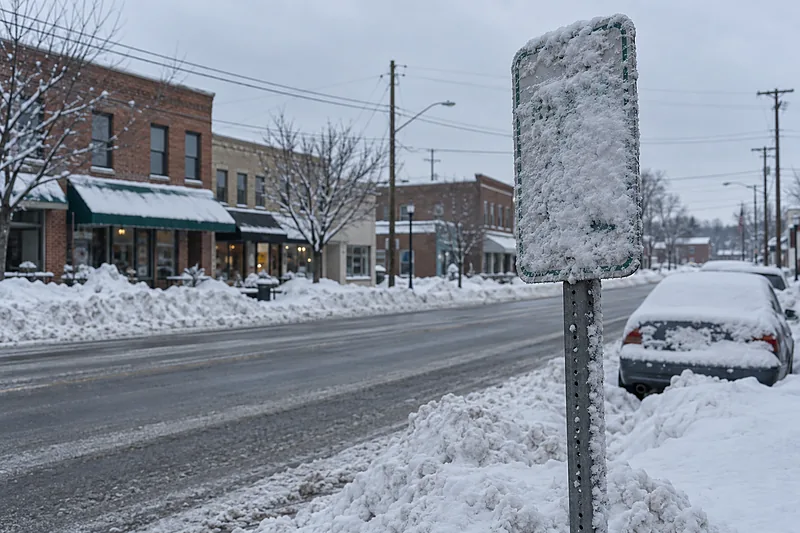
A declared snow emergency can change where you are allowed to park and what you need to move before municipal plows arrive. During major storms, cities across Kent County can place parking restrictions on designated routes, giving city plows room for curb-to-curb municipal plowing. The public roadway gets cleared, but the pass can leave a larger berm at your driveway or lot entrance. Because each city’s declaration rules, thresholds, and duration can change, check your city’s current notices rather than relying on an older rule. Cars left on parking ban routes can be ticketed or towed, so move your vehicle according to the notice in effect.
Clearing Private Property While the City Works
Even while municipal crews are clearing public streets, property owner responsibility still includes your driveway, private lot, and walkways. Clearing a berm left across an entrance after a curb-to-curb pass is private-side work. Sidewalk clearing must also meet the city’s required clearing window, so use the current municipal notice for the applicable timing. Plan customers are usually cleared when routes fire at the trigger, though another pass may be needed after city plows come through.
Safety, Liability, and the Cost of Waiting
Snow left behind after a storm can make your property harder to use safely with every passing hour. Foot traffic can pack a walkway into ice within hours of the storm ending, while daytime melting can refreeze overnight into a slick glaze. Clearing the snow before that buildup develops helps limit slip-and-fall exposure and protects your guests, delivery drivers, and anyone approaching the door.
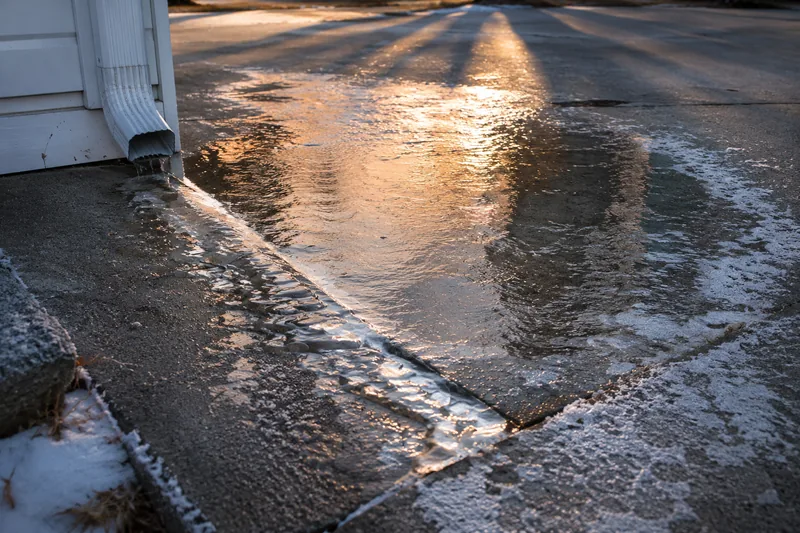
For a business, slip and fall liability extends along the route customers take between their cars and the entrance. Snow blocking hydrants or exits can interfere with emergency access, and buried mailboxes can stop deliveries. Accessible routes also need to remain usable, so waiting can turn a routine clearing job into a broader safety problem.
The Visit Log: Proof Your Property Was Cleared
If a slip claim arises later, a dated record can show when your property was cleared and what material was applied. We create a time-stamped visit log for every clearing and record each salt application separately. Documentation, including your visit log and salt-application record, is available on request.
Emergency Snow Removal Across Kent and Ottawa Counties
Your property can be blocked by heavy snow even when a nearby community receives far less accumulation. Grand Rapids averages 77.6 inches of snow each year based on the 1991-2020 climate normal, showing how much snow the area typically receives over a full winter. Lake-effect snowfall contributes heavily to that total across West Michigan. Because heavier bands can settle over one community while leaving another with less snow, emergency calls come from throughout our Kent and Ottawa County service area. Wherever your property is located, emergency snow removal can restore access when accumulation blocks a driveway, parking lot, or entrance.
Where Rely Rolls When You Call
Rely Snow Removal answers emergency calls across these Kent and Ottawa County communities:
- Grand Rapids, MI
- Wyoming, MI
- Kentwood, MI
- Walker, MI
- Grandville, MI
- Jenison, MI
- Forest Hills, MI
- Ada, MI
- Cascade, MI
- Lowell, MI
- Byron Center, MI
- Caledonia, MI
- Rockford, MI
- Comstock Park, MI
- Plainfield Township, MI
- Belmont, MI
- Northview, MI
- Standale, MI
- Cedar Springs, MI
- Sparta, MI
- Cannonsburg, MI
- Alpine Township, MI
- Kent City, MI
Emergency Snow Removal Questions, Answered
How much does emergency snow removal cost?
Will anyone answer if I call at 3 am during a storm?
How fast can you dig me out after I call?
Can I get a one-time plow-out without a seasonal contract?
What should I do when my city declares a snow emergency?
Do plan customers get cleared before emergency calls?
Need emergency snow removal now? Call Rely Snow Removal at (616) 883-2471.
Call Rely, Day or Night
When snow leaves you stuck at home or blocks access to your business, call Rely Snow Removal. We provide 24/7 storm response throughout the winter across Kent and Ottawa Counties. Call (616) 883-2471 to explain the blockage and get a response time window, or request a free estimate online.