
De-Icing & Salting Services in Grand Rapids, MI – Rely Snow Removal
Request a Free Estimate
We're ready to take on your property!
Rely Snow Removal Grand Rapids provides de-icing and salting for Grand Rapids, MI homes and businesses, backed by 15 years of experience. When ice blocks a doorway, driveway, walkway, or parking area, you need safe access restored. Our de-icing service covers residential driveway and walkway salting, plus commercial parking lot ice control. We also provide anti-icing with brine before a storm. Ice-only visits handle freezing rain and refrozen meltwater, even without snow to plow. Salting can accompany our broader snow removal work.
Our crews spread treated rock salt, pre-wetted before application. Because calcium chloride keeps melting after plain salt stops, we use it when pavement is too cold for rock salt. Before storms, we can apply liquid brine mixed to 23.3 percent salt, so it stays dissolved in cold weather and covers pavement in advance.
We match material and measured rate to pavement temperature rather than treating every surface alike. Every salt application goes into a time-stamped log, giving you a written record of the visit. When conditions change outside a plowing event, our 24/7 storm response also covers ice-only weather. We are licensed and insured, and our free estimates set out the recommended service for each property.
Frequent snow, sleet, and overnight refreezing can make access difficult throughout Grand Rapids, Kent County, and Ottawa County. We serve Grandville, Walker, and Caledonia as well as the city. Rely Snow Removal schedules service around your property’s access points and exposure, with clear options for homes and businesses.
What Our De-Icing & Salting Service Covers
How and when you use the property determines the ice-control schedule that makes sense. Ice control can be purchased as a standalone service or scheduled as salting after the plows finish. Our snow and ice management covers commercial and residential pavement, with service available for one-time needs or recurring winter routes. You choose the schedule that fits the property.
Commercial Parking Lots, Entrances, and Walk Areas
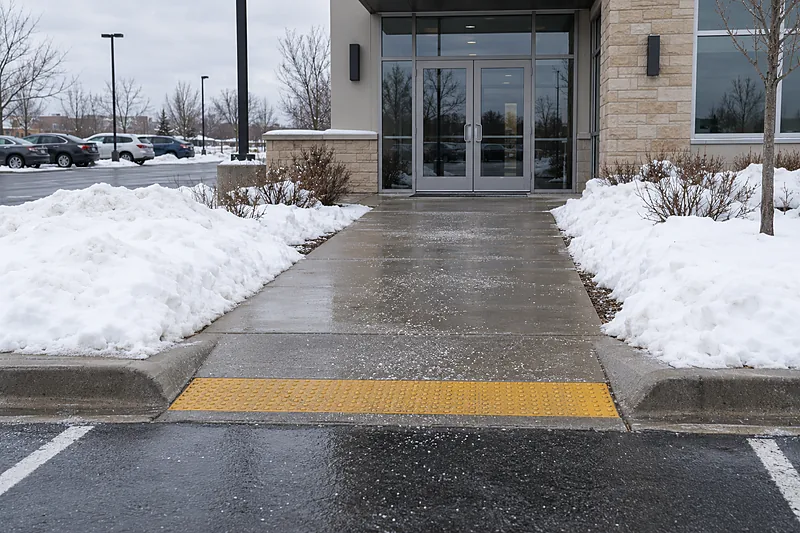
When winter weather threatens access to your business, commercial de-icing supports business continuity by helping keep customers, tenants, and employees moving safely. Treatment can cover drive lanes, parking stalls, loading areas, cart corrals, entrances, and pedestrian approaches. We keep entrances ADA-clear while addressing the surfaces that create slip-and-fall exposure. Every application enters the service record, giving the property manager documentation for that visit. Parking lot ice control can accompany snow and ice removal after the plows finish or operate as a separate service when ice forms without accumulating snow.
Residential Driveways, Walkways, and Steps
A clear driveway does not always mean the entire route to your door is safe. Driveway salting covers the main drive, the driveway apron, and the path you use to reach the house. We give added attention to shaded stretches, north-facing pavement, and the apron near the street because meltwater often refreezes there before it does elsewhere. Walkway de-icing includes front walks and steps treated with foot-traffic-sized ice melt. Salting can follow a plow visit or stand alone between storms when clear pavement develops a new layer of ice.
Standing Route Service or One-Time Salting
If you want ice treated as conditions change without having to call for each visit, a standing winter route keeps your property on our list. Crews provide seasonal ice control whenever the pavement requires treatment. For a specific need, a one-time application can cover an upcoming event, an ice storm, or a property changing hands. Your winter service plan can also assign the brine pass to selected zones before weather arrives and post-storm salt to areas that need it afterward.
Anti-Icing and De-Icing: Before and After the Storm
The timing of ice control determines whether treatment helps prevent a strong bond or breaks up ice that has already formed. Anti-icing goes down before snow arrives to limit the ice-to-pavement bond, while de-icing treats ice after it forms. We use a zone-by-zone plan to assign each part of your property to one or both treatments.
Brine Pre-Treatment Before Snow Falls
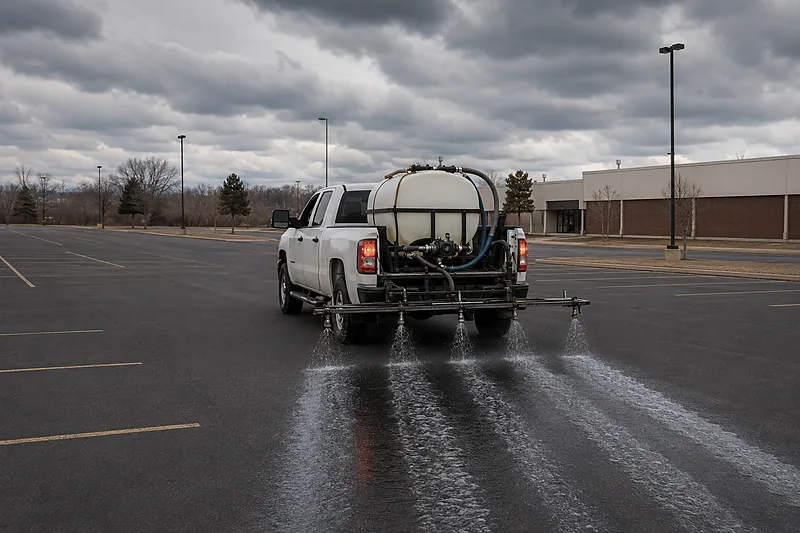
When snow is approaching, treating dry pavement early can keep the first layer from bonding firmly to the surface. Our crews spray liquid salt brine before the first flakes arrive. At a 23.3 percent salt concentration, the mixture has a freezing point of about 6 degrees below zero F, but we use it only when pavement is roughly 15 degrees F or warmer.
Weather alerts give us about 3 hours of notice, allowing crews to complete the anti-icing treatment while the pavement is still dry. In most conditions, this brine pre-treatment keeps initial snowfall from freezing onto the surface. When traffic packs untreated snow down, the resulting ice-to-pavement bond requires far more material and mechanical scraping to remove.
De-Icing After the Snow Stops

Even after plowing, a thin layer of ice or glaze can leave your pavement slick. Once the plows expose the surface, we apply granular salt for post-storm de-icing and salting, allowing the material to contact the remaining ice directly and begin ice melting. Deep snow still requires plowing as a separate service. We apply the de-icing material at the measured rate for that day’s pavement temperature. When daytime meltwater refreezes into a slick glaze overnight, crews recheck treated areas and apply more only where conditions call for it.
Materials for De-Icing & Salting, Matched to the Cold
Your pavement needs a material that can still work at the temperature outside. As pavement temperatures change through a West Michigan winter, our ice salting service shifts among treated rock salt, calcium chloride, magnesium chloride, liquid brine, and sand. We select these de-icing materials by pavement temperature because no single ice melt works effectively through every cold spell your property faces.
Treated Rock Salt That Stays Where It Lands
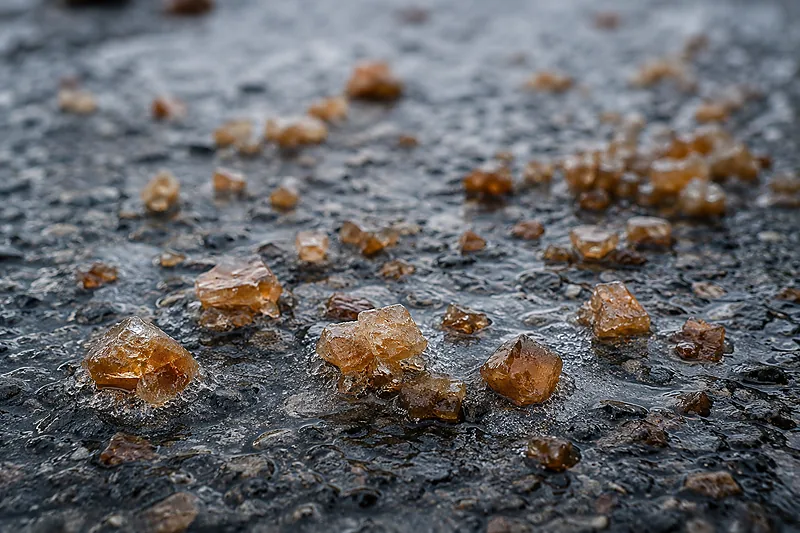
When pavement temperatures remain around 15 degrees F or warmer, treated rock salt is the main material we use; the rock salt itself is sodium chloride, while “treated” means additives were blended in before delivery to help the granules work and stay put. Below that practical limit, ordinary rock salt melts ice too slowly to be useful.
During spreading, we pre-wet the granules by spraying them with brine so they begin working sooner and stay on your pavement instead of bouncing away. In road testing, retention measured after five vehicles had passed showed that about 93 percent of pre-wetted salt remained on the surface, compared with about 30 percent of dry material. The improved retention leaves less salt wasted and more material working where it was spread.
Calcium and Magnesium Chloride for Deep Cold
Rock salt becomes less useful as your pavement gets colder, so deeper cold calls for chloride products that continue working at lower temperatures. Calcium chloride keeps melting ice at temperatures near 20 below zero F and releases heat as it dissolves, giving the reaction an immediate head start.
Magnesium chloride covers the middle range down to about 10 below zero F and is easier on nearby plantings than rock salt, but it is harder on concrete because it attacks the cement paste itself. We reserve it for deep cold and keep it off concrete where practical. Depending on the pavement temperature during a cold-snap week, we apply both materials as liquid de-icer or blend them with rock salt.
Sand When It Is Too Cold to Melt
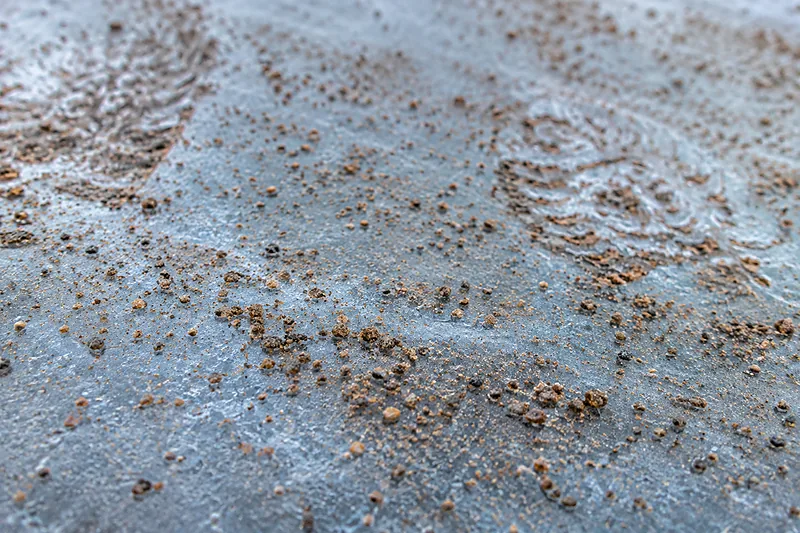
Once temperatures fall beyond the effective range of de-icing chemicals, traction becomes the immediate concern around your property. We use sand rather than trying to force a melt that the conditions will not support. Sand does not remove ice, but its grit helps tires and boots grip the frozen surface. It is also the only material we apply to first-winter concrete. When winter ends, crews can sweep or wash the remaining sand from the pavement.
Application Rates and the Pavement-Temperature Rule
Too little material can leave glaze on your pavement, while too much gets tracked indoors and goes to waste. Effective ice control depends on the application rate, not how much salt a crew can spread. Before treatment, we take a pavement-temperature reading, choose the rate, and adjust it for your surface type. Those decisions put the right amount of material where it can work.
Pavement Temperature, Not Air Temperature
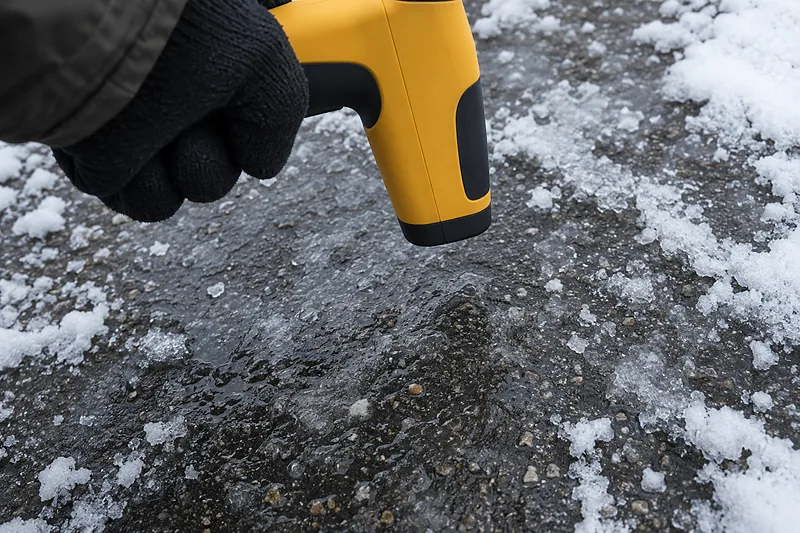
Your weather app can show one temperature while the pavement is several degrees warmer or colder. A surface may retain overnight cold through a sunny morning, then hold daytime warmth after the air cools at night. Because the material and application rate must follow the pavement temperature, we take a surface temperature reading before treatment. Sun, shade, and wind can also create temperature differences across your property, so an exposed entrance and a shaded loading area may require different treatments during the same visit.
Calibrated Spreaders and Sprayers
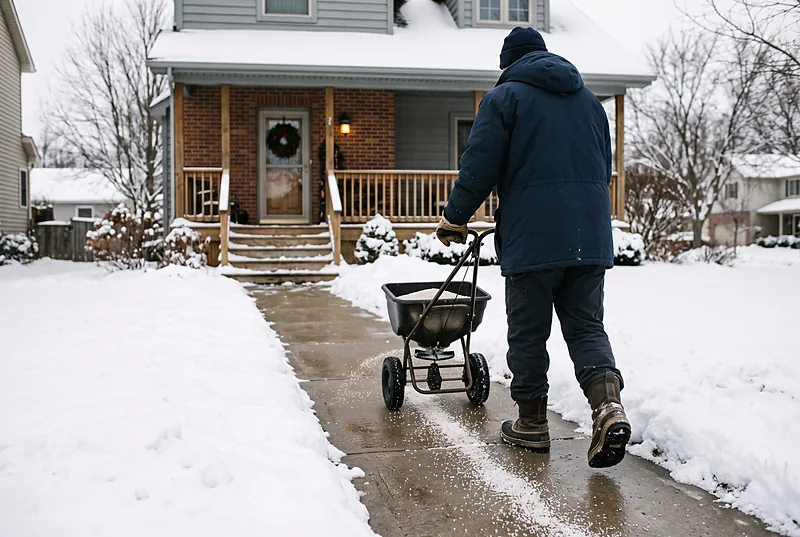
Parking lots and long driveways need broad, even coverage without releasing more material than the pavement requires. Crews use tailgate and hopper spreaders to cover those larger surfaces at a controlled rate. On your walkways and steps, a walk-behind drop spreader places material without throwing it into adjacent areas. For the liquid brine pass, we use boom sprayers or hand-wand sprayers depending on the size and shape of the treatment zone. We calibrate each spreader and verify its calibration so it releases a known amount per area and the selected application rate reaches the pavement.
Salt on New Concrete, Pavers, and Asphalt
If your concrete was poured within the last year, we use sand only and apply no de-icing chemicals during its first winter. The slab is still curing, and even gentler products can weaken its surface. Mature air-entrained concrete can receive salt at measured rates because microscopic air pockets help it withstand the pressure created as water freezes. Pavers receive lighter applications with return visits as needed because heavy melting can carry away the joint sand. Asphalt tolerates salt better, but we still set the rate for current conditions rather than applying excess material.
Why Choose Rely Snow Removal for Ice Control
When you compare de-icing companies, look for a de-icing company whose crews make a site-specific decision at every visit rather than treating every paved area with the same product and spreader setting. Rely Snow Removal matches the material to the pavement temperature and applies it at the calibrated rate.
- When you need to reconcile an invoice or answer a question from a tenant, manager, or insurer, you can request the time-stamped log for any salt or brine application.
- Our weather alerts arrive about 3 hours ahead, giving us time to stage crews and load the planned material without requiring you to call.
- Because pavement conditions can change throughout the winter, we maintain 24/7 dispatch and deploy crews based on current conditions rather than a preset calendar. The dispatcher directs the appropriate route as surface temperatures change.
- Rely Snow Removal is licensed and insured. Commercial clients can request a certificate of insurance for their property records.
- Your property is handled by crews with 15 years of experience in snow & ice management across West Michigan, including routes exposed to lake-effect snow off Lake Michigan.
- Before service begins, your free estimate includes a written treatment map identifying areas for the brine pass, post-plow salt zones, walkways that need foot-traffic-sized ice melt, and first-winter concrete reserved for sand. You can review and correct the map before it becomes the crew’s route sheet.
Call (616) 883-2471 or request a free estimate for an ice control plan matched to your property.
De-Icing & Salting Cost in Grand Rapids
Your de-icing cost depends on the surfaces being treated, the material needed, and the amount applied. A flat salting price would miss differences in pavement, exposure, and service needs from one property to another. We start the estimate with the areas that require treatment and calculate the cost using factors including the following.
- Area treated: The size of your parking lot, driveway, walkways, and entrances determines how much material and application time the job requires. We measure the parking-lot square footage along with the length of the other paved areas.
- Material selected: Treated rock salt is the economy option, while chloride blends for deep cold cost more per application. We match the product to pavement temperature so a higher-cost blend is used only when conditions require it.
- Timing: Applying the brine pass before the storm can use roughly a third to a quarter of the material needed after ice has already bonded to the pavement. Post-storm service may require additional material when packed snow or glaze remains.
- Service frequency: Your estimate accounts for either a standing route through the season or one-time visits, depending on how you schedule service.
- Trouble spots: Shaded sections, sloped entrances, and aprons prone to refreezing may need re-checks and measured follow-up applications.
A free estimate connects each cost factor to your actual property and expected schedule. For an ice salting service quote, call (616) 883-2471 or send us your property details.
How De-Icing Works With Rely, Storm to Storm
Knowing how it works and what to expect before the first treatment makes winter service easier to plan. Rely Snow Removal keeps the service cycle straightforward, from the initial estimate and site walk through planning, storm staging, treatment, and the service record.
-
Get a Free Estimate and Site Walk
Call or use the quote form to schedule your site walk. We measure the treatment area, identify each surface, and prepare a free estimate based on the property.
-
We Map Your Trouble Spots
Your plan marks shaded areas, refreeze-prone aprons, and entrances. It also sets separate zones for the brine pass and post-storm salting.
-
Crews Stage Ahead of the Storm
As a storm approaches, weather alerts give our crews about 3 hours to stage equipment and materials. Your scheduled brine zones receive treatment without any action from you.
-
Salting Follows the Storm
Once snowfall ends, we treat your planned zones. Where both services are booked, salting follows the plows, and crews return for re-checks on nights when refreezing is likely.
-
Every Application Goes in the Log
Each visit enters your service record as it happens, giving you a record of the work performed.
Ready for the first step? Call (616) 883-2471 for your free estimate.
Lower-Salt, Lower-Impact De-Icing
Excess de-icing material can wash off your pavement and carry chloride into nearby soil and waterways. An honest eco-friendly de-icing plan therefore starts by reducing the amount applied. Before a storm, we use the brine pass because it can complete the assigned treatment with a fraction of the material. After the storm, treated salt is applied at the calibrated rate.
As pavement approaches 15 degrees F, applying more rock salt no longer produces a useful melt. Where melting is unnecessary, we use sand to provide traction instead. Measured application rates also leave less chloride residue after the ice melts, rather than coating your pavement with excess material.
Pet- and Plant-Conscious Choices
Walkways used by pets and areas beside lawns or planting beds may need a more selective approach. We can reserve low-impact ice melt for chosen walkway zones, apply it at lighter rates, and use sand wherever traction is enough. Products marketed as pet-safe ice melt still require careful placement, so we keep loose piles away from beds and lawn edges. Gentler blends melt less aggressively, which makes them better suited to selected zones than to the entire property.
Slip-and-Fall Liability and the Salt Log
A claim that a commercial property was never treated can leave the owner or manager needing a factual account of the response. When a customer, tenant, or visitor makes such a claim, the time-stamped application log provides specific information about the work performed. We treat planned entrances and walks and record every application as it happens. With 24/7 dispatch throughout the winter season, crews can respond when pavement conditions call for ice control instead of waiting for the next business day.
Each visit and every salt or brine application becomes part of the documented storm response, including the date and time. These service records give you specific information when answering questions from an insurer, tenant, HOA board, or claims representative. The log does not establish that a surface was free of hazards or decide a legal outcome. It provides a clear record of what our crew did at the property.
What the Time-Stamped Record Shows
When you need to verify how the property was treated, the per-visit record identifies the service date and time, the zones treated, the material applied, and whether the crew made the brine pass or used granular salt. Property managers and HOA boards receive this service documentation through one point of contact. The records remain available on request from the same contact throughout the season.
Ice Without Snow: Freezing Rain and Refreeze Nights
Your driveway can become dangerously slick even when no snow has fallen. Freezing rain and drizzle can coat the pavement, while meltwater from a sunny afternoon can harden again overnight. On clear, cold nights, pavement releases stored heat to the sky, creating black ice by dawn. Lake-effect snow brings many of West Michigan’s larger storms, but milder days around a thaw often produce the glaze that catches drivers during the morning commute.
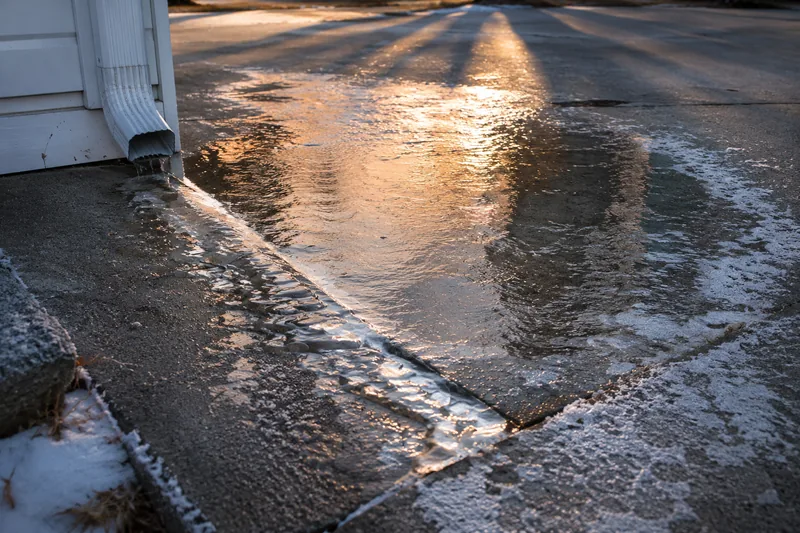
Because an ice-only event leaves nothing for a plow to push, we do not send one. Our ice removal service still operates through round-the-clock winter dispatch. We monitor the forecast and apply de-icer when pavement conditions call for treatment. Roof ice and ice dams require their own service.
Ice-Only Service Calls
A slick morning can require treatment even though there is no snow to clear. During an ice-only visit, we treat the glaze without sending a plow. As freezing rain begins coating the surface, we time the application of salt or a chloride blend to the forecast. Rain can dilute material applied too early, so the brine pass remains reserved for snow events. Standing-route properties receive ice-only service automatically, and you can also book a one-time visit for an isolated slick morning.
De-Icing & Salting Across Kent and Ottawa Counties
Slick pavement can make your parking lot, walkways, steps, or driveway hazardous as runoff hardens between larger storms. Under the 1991-2020 climate normal, Grand Rapids averages 77.6 inches of snow annually, creating recurring demand for ice control throughout winter. Lake-effect snow off Lake Michigan can add accumulation in narrow bands, while melting snow can refreeze and leave pavement glazed. Because those changing conditions affect communities across West Michigan, our de-icing and salting routes extend beyond Grand Rapids into surrounding towns.

Where Rely Applies De-Icing and Salting
Properties outside Grand Rapids face the same changing winter conditions. Rely Snow Removal provides de-icing and salting throughout its Kent and Ottawa County service areas, including the following communities.
- Grand Rapids, MI
- Wyoming, MI
- Kentwood, MI
- Walker, MI
- Grandville, MI
- Jenison, MI
- Forest Hills, MI
- Ada, MI
- Cascade, MI
- Lowell, MI
- Byron Center, MI
- Caledonia, MI
- Rockford, MI
- Comstock Park, MI
- Plainfield Township, MI
- Belmont, MI
- Northview, MI
- Standale, MI
- Cedar Springs, MI
- Sparta, MI
- Cannonsburg, MI
- Alpine Township, MI
- Kent City, MI
Salting and Ice Control Questions, Answered
Does snow removal include ice?
At what temperature does salt stop working?
Can you salt a new concrete driveway?
Do you salt sidewalks and front steps?
Is de-icing safe for pets and planting beds?
Do I have to call before every storm?
How is de-icing and salting billed?
If you have other frequently asked questions about your property, call (616) 883-2471.
Put Rely Snow Removal on Ice Duty This Winter
Before the next freeze, Rely Snow Removal can set up an ice-control plan for your Grand Rapids property. Call (616) 883-2471 or request a free estimate to discuss your pavement areas, service schedule, and the material options that fit your site. Once you get in touch, we can walk through the details of your property and answer your questions before you decide.